Necessary cookies are required to enable the basic features of this site, such as providing secure log-in or adjusting your consent preferences. These cookies do not store any personally identifiable data.



Learning Foundry
Your training material isn’t teaching anyone.
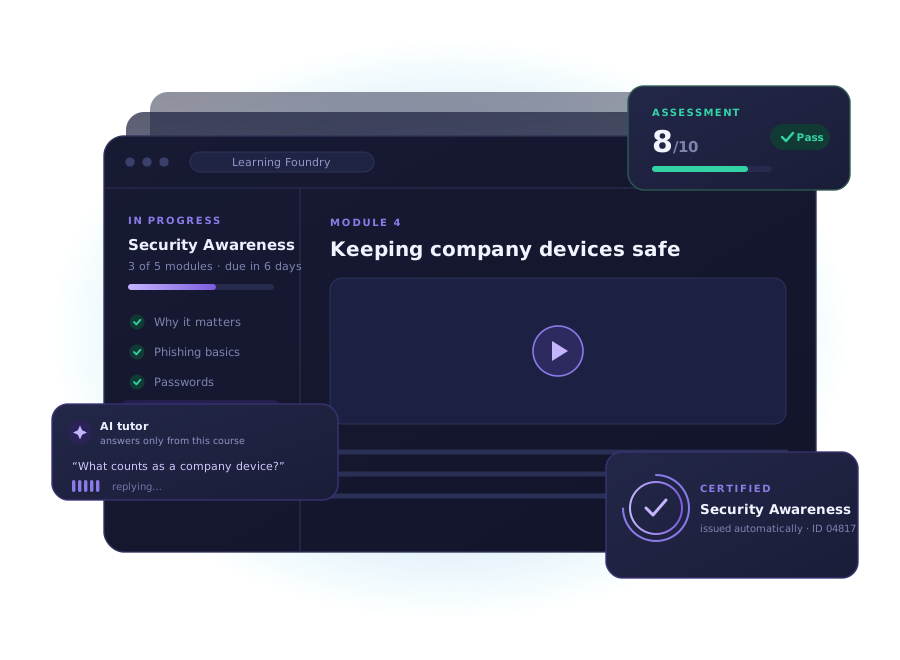
Learning Foundry turns the material you already have into structured courses: AI tutoring, assessments that must be passed, certificates on merit, and deadlines managers can see.
What It Is
An AI learning platform that runs the whole programme
Sharing a deck is distribution. Assigning it, teaching from it, testing it, certifying it and knowing who has not finished is a programme. Learning Foundry is the second thing.
Today
Learning assembled by hand
- Training material sits in a shared folder
- Concepts get explained in person, repeatedly
- "Completed" means somebody opened the file
- Certificates are produced one at a time
- Completion is tracked in a spreadsheet
- Managers find out after the deadline passes
With Learning Foundry
Learning that runs itself
- Material becomes an assigned, structured course
- An AI tutor answers questions from the course itself
- Completion requires passing an assessment
- Certificates are issued automatically on merit
- Progress is visible to learner and manager alike
- Alerts arrive while there is still time to act

Why It Matters
Learning does not fail at the material. It fails after it.
Most organisations already have good training content. What breaks is everything that happens around it: the explaining, the chasing, the testing and the proving.
Course creation
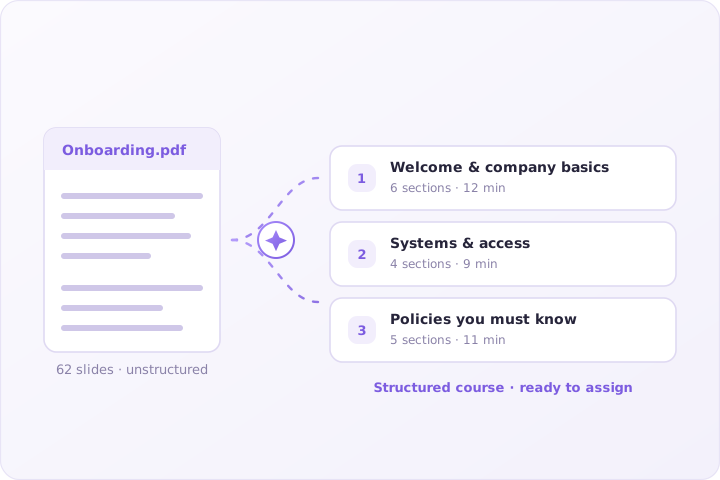
Build a course from material you already own
Upload the PDFs, presentations, documents and recordings your teams already use, and Learning Foundry turns them into a structured course rather than a folder of attachments. Existing knowledge becomes the foundation of the learning experience instead of sitting passive on a drive.
Without it: converting a sixty-slide deck into a proper course is a project nobody has time to start. The deck stays a deck: shared once, opened rarely, and explained again in person every time someone new joins.

AI tutoring
An AI voice tutor that only knows your course
Learners can talk to a tutor grounded in the course material itself: ask what a term means, request a different explanation, revisit a difficult section, or work through a concept conversationally before being assessed on it. It teaches from your content, not from the open internet.
Without it: a learner who does not understand slide fourteen has two options: guess, or find the one person who wrote it. Most people guess, and the gap only surfaces later.
Assessment
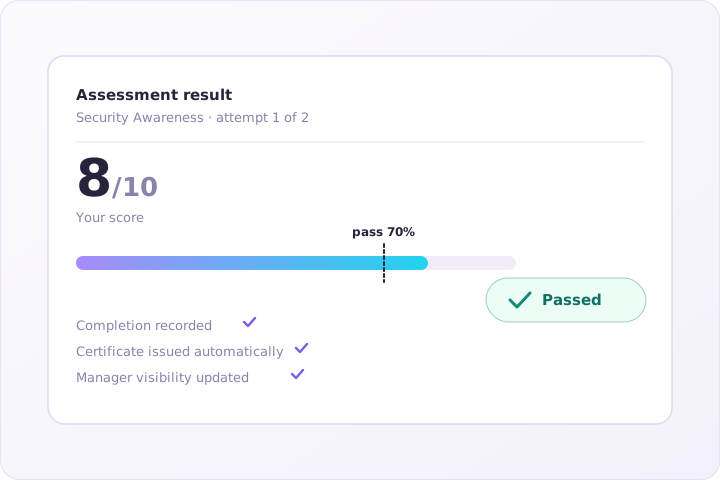
Assessments that decide completion
Each course ends in an assessment drawn from its own content, and completion depends on meeting the passing criteria you configure. Opening the material is not the same as finishing the course, and the system treats those as different things.
Without it: "completed" means somebody clicked through to the last page. You find out the learning did not land when the mistake it was meant to prevent actually happens.
Certification
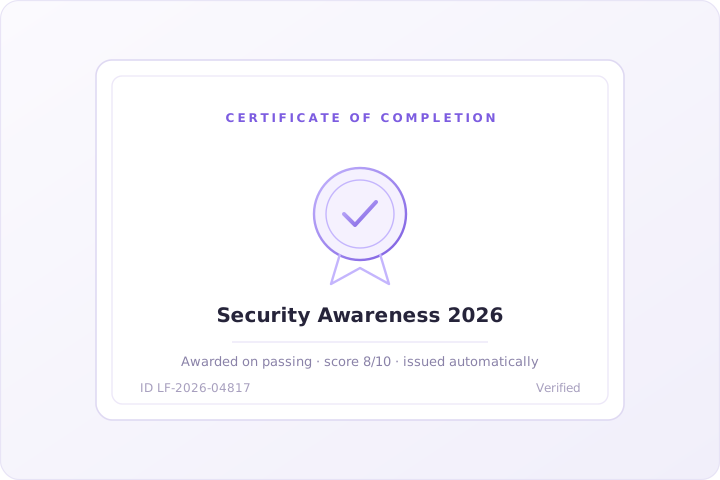
Certificates issued on merit, automatically
Learners who pass receive their certificate without an administrator generating and emailing it. The certificate reflects a demonstrated result rather than attendance, so it is worth something to the person holding it and to the auditor reading it.
Without it: certificates get issued for turning up, which makes them administrative paperwork rather than evidence. Someone still has to produce each one by hand.

Deadlines and reminders
Deadlines that chase themselves
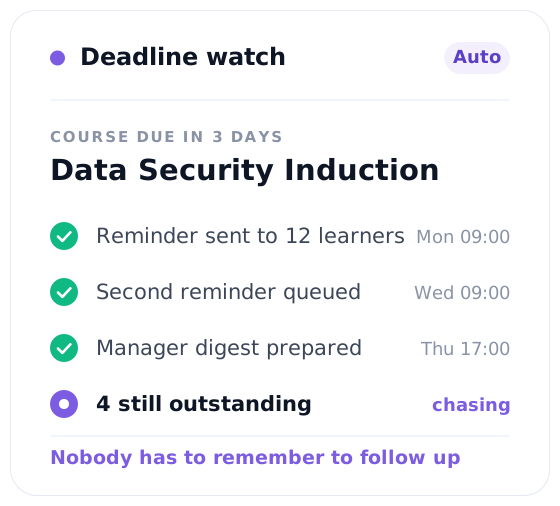
Courses carry completion deadlines. Learners are reminded when a course is pending or a date is approaching, and managers are alerted when someone on their team is drifting towards an overdue deadline, while there is still time to act.
Without it: managers discover incomplete training after the deadline, when it has already become a compliance problem, and the follow-up falls to whoever is willing to chase people manually.
Team visibility
Progress you can see without asking
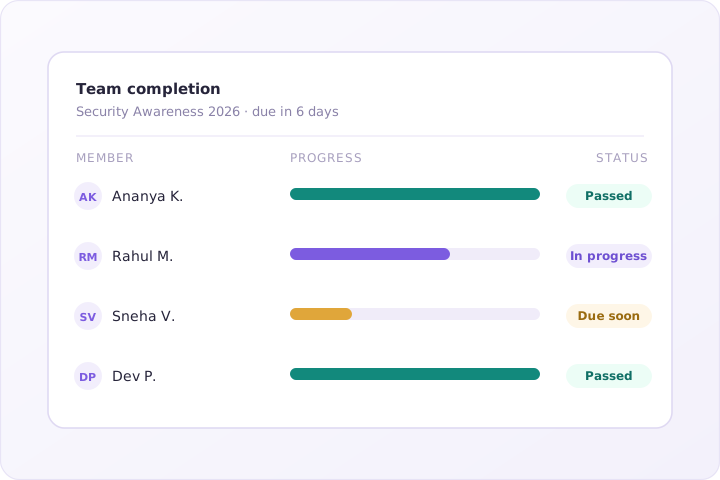
Assigned, in progress, pending, completed and approaching-deadline are all visible in one place, for the learner and for the manager responsible for the team. Reporting becomes a by-product of the workflow rather than a separate exercise.
Without it: completion lives in a spreadsheet somebody updates by hand, which is out of date the day it is circulated and impossible to trust the week after.
The Path Through
A climb with one gate that cannot be walked around
Every stage hands straight to the next. One of them is a wall, and that is deliberate.
Create
Bring existing PDFs, decks, documents or recordings, and shape them into a structured course.
Assign
Send the course to the right people with a completion deadline attached.
Learn
Employees work through the material at their own pace, within the dates you set.
Ask
The AI voice tutor answers questions about the course content, on demand.
Assess
A course-based assessment tests whether the material was actually understood.
The assessment must be passed
Not attended. Not opened. Not marked complete. Passed. Everything below this line has to be earned, which is the only reason a certificate from it is worth anything.
Certify
Learners who meet the passing criteria receive their certificate automatically.
Track
Progress, completion and approaching deadlines stay visible to learners and managers.
Where It Is Used
Any knowledge your organisation has to teach more than once
Employee onboarding
Product training
Process and SOP training
Security awareness
Compliance learning
Technical and tooling training
Policy education
Role-specific knowledge
Internal tools training
Functional training

Built For Teams
Learning that a manager can actually stand behind
When completion is measured rather than assumed, the conversation moves from chasing people to acting on what the numbers show.
Who It Is For
Four teams, four different reasons to need it
Learning & Development
Turn the material you have already produced into courses that can be assigned, assessed and certified, without rebuilding it from scratch.
HR & People Operations
Run onboarding and mandatory learning as a time-bound, trackable process instead of a reminder email and a hopeful spreadsheet.
Team Managers
See who on your team has outstanding learning while the deadline is still ahead of you, not behind.
Compliance & Risk
Evidence that required learning was assigned, understood, assessed and passed, with a certificate behind each claim.
Contact Us
Get in Touch with us
We’re here to assist you! Whether you have questions, need support, or want to discuss your project, our team is ready to help. Reach out today, and let’s explore how we can work together to achieve your goals.