Necessary cookies are required to enable the basic features of this site, such as providing secure log-in or adjusting your consent preferences. These cookies do not store any personally identifiable data.



Talent Compass
From we need to hire, to a shortlist worth reading.
Talent Compass brings job creation, approval, candidate intake, AI screening and outreach into one workflow, so recruiters spend their time on the candidates most likely to fit.
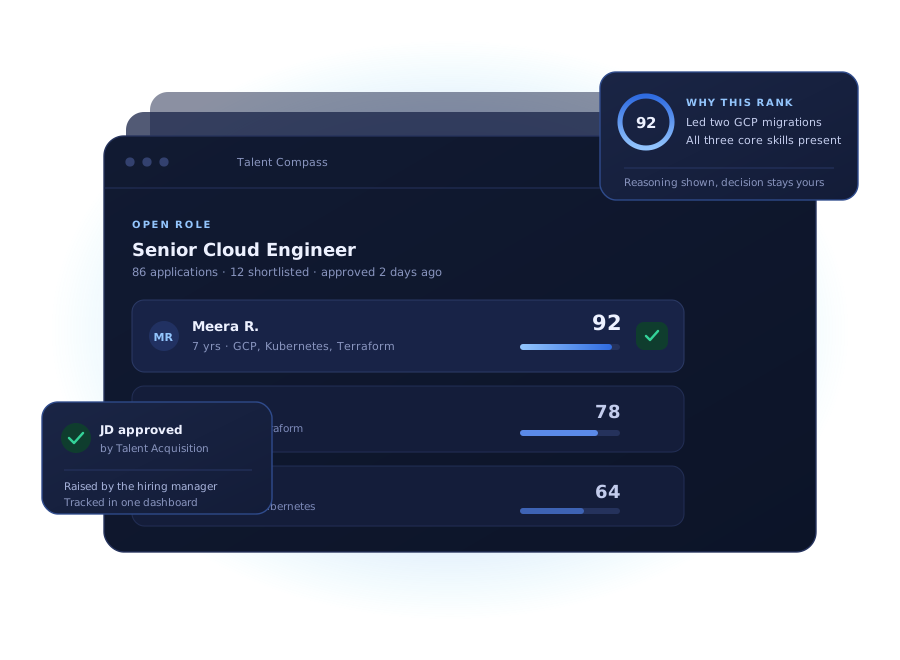
What It Is
One recruitment workflow, not six disconnected ones
Requirements, approvals, candidates, screening, outreach and status stay connected. AI handles the repetitive comparison work while hiring decisions stay with the people accountable for them.
Today
Recruitment across inboxes
- Every JD starts from a different old document
- Requirements arrive by email and get edited as attachments
- Managers follow up to ask where a role stands
- Resumes pile up across inboxes and drives
- Candidates are read in the order they arrived
- Conversation history sits with one recruiter
With Talent Compass
Recruitment as one process
- Role details become a structured description
- One route from request to approved role
- Status is visible on a dashboard
- Applications are organised against the role
- Candidates are ranked with reasoning shown
- Conversations stay attached to the candidate

Why It Matters
The best candidate is rarely the first one you read.
Recruitment slows down in the gaps: waiting on a description, hunting for resumes, comparing eighty profiles by hand, and following up on conversations scattered across inboxes.
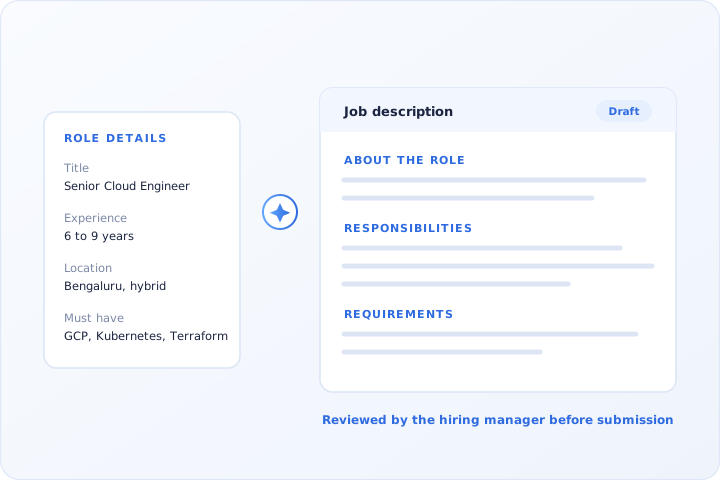
Job description
Turn role details into a job description in minutes
A hiring manager enters the role information, or uploads an existing description to work from, and AI drafts a structured JD they then review and refine. Consistency across roles stops depending on who happened to write it.
Without it: every manager writes a JD from a different old document, so two similar roles end up described in two different ways, and the recruiter has to reconcile them.

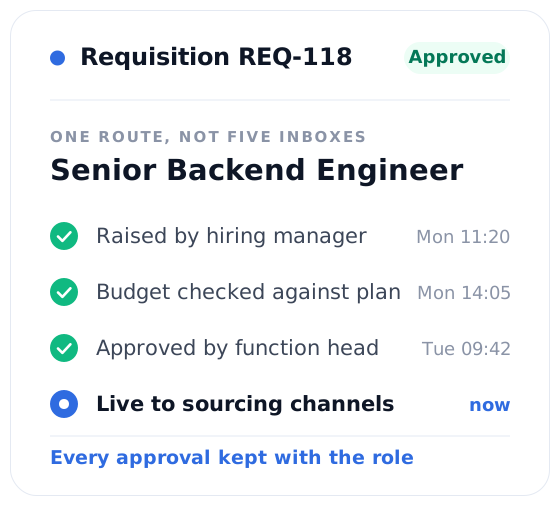
Submission and approval
One route from request to approved role
The completed description goes straight to Talent Acquisition, who review, edit and approve it in the same place. The hiring manager tracks its status on a dashboard instead of asking where it stands.
Without it: the JD arrives by email, gets edited in an attachment, and the manager follows up three times to ask whether recruitment has actually started.
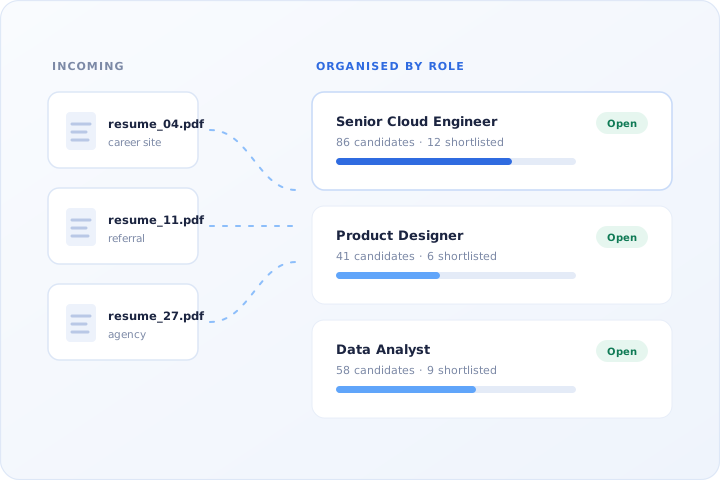
Candidate intake
Every resume lands in the same place
Applications from your supported sources are captured and organised against the role they belong to, so recruiters review candidates in the context of the position rather than digging through an inbox.
Without it: resumes accumulate across email, shared drives and individual recruiter folders, and nobody can say with confidence how many people actually applied.
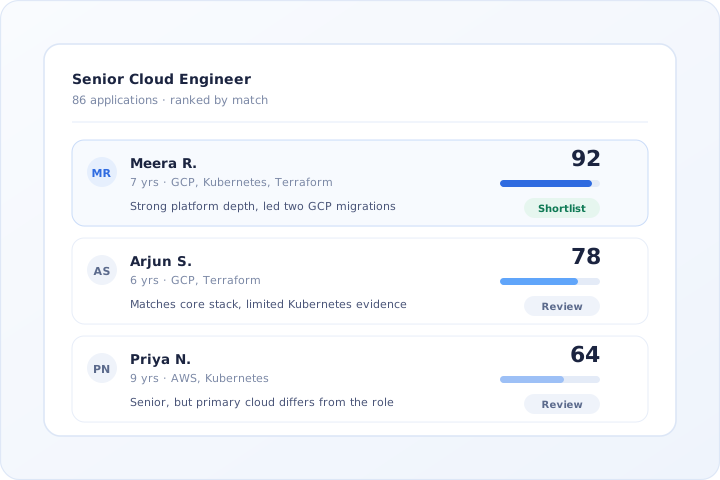
Screening and ranking
A ranked shortlist, with the reasoning attached
AI evaluates each resume against the approved description and returns a comparative score with the reasoning behind it: relevant experience, matching skills, apparent gaps. Recruiters start with the profiles most likely to be worth their time.
Without it: someone opens eighty-six resumes in whatever order they arrived, and the strongest candidate might be the sixty-first one read on a Friday afternoon.
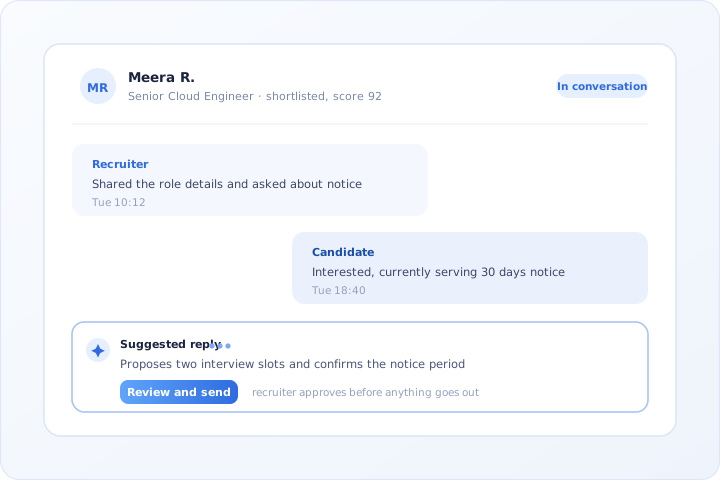
Outreach and conversations
Candidate conversations stay with the candidate
Recruiters use AI assistance to prepare outreach and manage supported email conversations without leaving the workflow, so the exchange stays attached to the candidate and the role rather than living in a personal inbox.
Without it: the conversation history sits with one recruiter, and when they are on leave nobody else can pick the candidate up without starting again.

Decision support
A score you can argue with
Every ranking comes with its reasoning: which experience is relevant, which skills match, where the gaps are and what a recruiter should verify. The score is there to order your reading, not to make the decision for you.
Without it: screening tools hand back a number with nothing behind it, so recruiters either trust it blindly or ignore it entirely, and neither is a process you can defend.
From Many To One
Many applications in, one hire out, nothing lost on the way
A typical cycle. Each stage narrows the field against stated criteria and records why every candidate moved on or stopped.
Every CV that arrives, from every source, gathered in one place.
Read against the job description and scored on criteria you set, not on keywords alone.
Ordered by fit, each one carrying the reasoning behind its position.
Scheduling, reminders and panel coordination handled without a mailbox in the middle.
And a record of how you arrived here that outlives the person who ran the process.
Where It Is Used
Any role your organisation has to fill more than once
Engineering and technical hiring
Volume and campus recruitment
Niche and senior roles
Replacement hiring
Multi-location recruitment
Agency and referral pipelines
Internal mobility
Contract and project hiring

Built For Teams
Hiring managers and recruiters, finally on the same page
One requirement, one shortlist, one status. The conversation moves from chasing updates to discussing candidates.
Who It Is For
Four teams, four different reasons to need it
Talent Acquisition
Review incoming requirements in one place, and start with the candidates most likely to fit rather than the ones who applied first.
Hiring Managers
Raise a role in minutes and see exactly where it stands without chasing anyone for an update.
HR Leadership
A consistent recruitment process across every open role, with the same standard applied to each one.
Interview Panels
Arrive at the interview with the screening reasoning already in front of you.
Contact Us
Get in Touch with us
We’re here to assist you! Whether you have questions, need support, or want to discuss your project, our team is ready to help. Reach out today, and let’s explore how we can work together to achieve your goals.